Why Does My Erection Go Away So Fast?
If you’ve ever asked yourself, “Why does my erection go away so fast?”, you’re not alone. Many men experience difficulty maintaining an erection at some point in their lives. While it can be frustrating or even embarrassing, an occasional loss of an erection is common and doesn’t always mean you have erectile dysfunction (ED). In many cases, the cause may be temporary and manageable with the right approach.
An erection depends on healthy blood flow, balanced hormone levels, proper nerve function, and mental well-being working together. If one of these factors is affected, it can become more difficult to achieve or maintain an erection during sexual activity.
Occasional erection problems can happen because of stress, fatigue, anxiety, alcohol use, or poor sleep. These situations don’t necessarily indicate a long-term medical condition. However, if the problem becomes frequent or starts affecting your confidence, relationships, or quality of life, it’s important to identify the underlying cause.
Persistent erection problems may be linked to low testosterone, diabetes, heart disease, high blood pressure, obesity, or certain medications. Psychological factors, including performance anxiety, depression, and relationship stress, can also play a significant role.
The good news is that many causes of erection problems are treatable. Identifying the reason behind the issue is the first step toward finding an effective solution. In this guide, we’ll explore the most common physical and psychological causes, lifestyle habits that may help, and when you should consider seeking professional support.
How Erections Work
An erection may seem simple, but it’s actually the result of your brain, hormones, nerves, and blood vessels working together. If any part of this process is disrupted, it can become difficult to achieve or maintain an erection.
Here’s a simple way to understand how it works:
🧠 Brain → 🧬 Hormones → ⚡ Nerves → ❤️ Blood Flow → 🍆 Erection
- 🧠 Brain: Sexual thoughts, attraction, or physical touch trigger signals from your brain.
- 🧬 Hormones: Healthy testosterone levels help support sexual desire (libido) and normal erectile function.
- ⚡ Nerves: Nerve signals travel from your brain to the penis, telling the blood vessels to relax.
- ❤️ Blood Flow: Increased blood flows into the erectile tissue while blood leaving the penis is temporarily reduced.
- 🍆 Erection: The penis becomes firm enough for sexual activity.
Because every step is connected, problems at any stage can affect your ability to maintain an erection. For example, low testosterone, stress, poor circulation, diabetes, certain medications, or performance anxiety can interrupt this process.
Understanding how erections work makes it easier to identify the underlying cause rather than simply treating the symptom. Once the cause is identified, many men can find effective treatment and regain their confidence.

Common Physical Causes of Losing an Erection
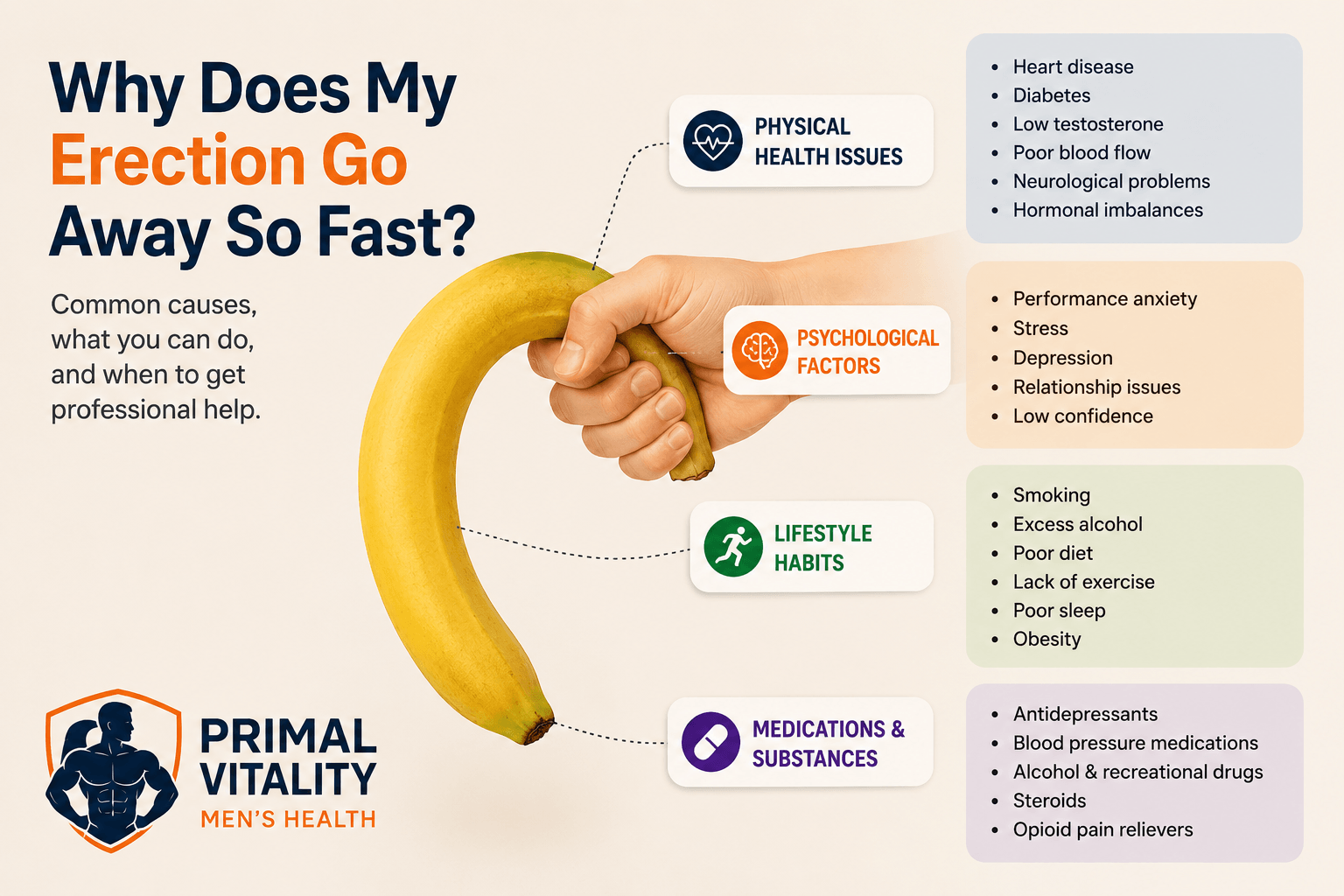
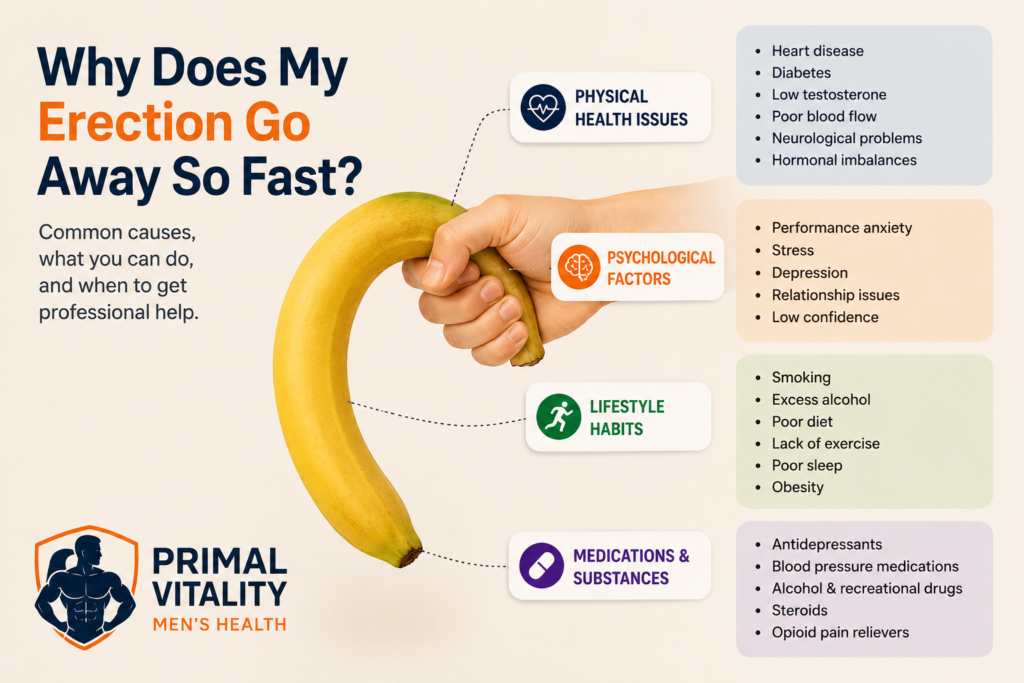
If you’re wondering, “Why does my erection go away so fast?”, the answer may be related to your physical health. An erection depends on healthy blood flow, balanced hormones, proper nerve function, and overall cardiovascular health. When one or more of these systems isn’t functioning properly, maintaining an erection can become more difficult.
While occasional erection problems are normal, frequent difficulty maintaining an erection may be a sign of an underlying health condition. Identifying the cause is the first step toward finding the right treatment.
Common physical causes include:
Many of these conditions are treatable. Addressing the underlying cause can often improve erectile function, overall health, and quality of life.
If your symptoms continue or become more frequent, don’t ignore them. They may be your body’s way of signaling that it’s time for a professional evaluation.
Psychological Causes That Can Affect Erections
Not every erection problem is caused by a physical condition. In many cases, your mental and emotional health can have a significant impact on sexual performance. Even when your body is healthy, stress or anxiety can make it difficult to maintain an erection.
One of the most common causes is performance anxiety. Worrying about sexual performance or fearing disappointment can interrupt the signals between your brain and body. This often creates a cycle where the fear of losing an erection actually makes it more likely to happen.
Stress from work, finances, family responsibilities, or other daily pressures can reduce sexual desire and make it harder to stay aroused. Depression may lower libido, affect mood, and reduce overall sexual satisfaction. In some cases, certain antidepressant medications may also contribute to erection difficulties.
Relationship concerns are another common factor. Poor communication, unresolved conflicts, or emotional distance between partners can increase anxiety and reduce intimacy. Fear of failure after one or two unsuccessful experiences can further affect confidence and make future sexual encounters more stressful.
The good news is that psychological causes are often treatable. Counseling, healthy communication, stress management, and Cognitive Behavioral Therapy (CBT) can help many men regain confidence and improve their sexual performance.
If anxiety or emotional stress continues to affect your erections, seeking professional support is an important step toward improving both your mental well-being and sexual health.
The Cycle of Losing an Erection
For many men, one bad experience can quickly turn into an ongoing cycle. A single episode of losing an erection doesn’t necessarily indicate a serious health problem. However, it can create anxiety that affects future sexual experiences.
When you begin worrying about whether you’ll be able to maintain an erection, your body may release adrenaline, often called the “fight or flight” hormone. While adrenaline is helpful in stressful situations, it can reduce blood flow and make it more difficult to achieve or maintain an erection.
As a result, the next sexual encounter may feel even more stressful. If the same thing happens again, confidence can decline, anxiety increases, and the cycle continues.
The Erection Anxiety Cycle One episode of losing an erection
↓ Performance anxiety develops
↓ The next sexual encounter feels stressful
↓ Adrenaline levels increase ↓ Maintaining an erection becomes more difficult
↓ Confidence decreases
↓ The cycle repeats
The good news is that this cycle can be broken. Identifying the underlying cause, managing stress, improving communication with your partner, and seeking professional support when needed can help restore confidence and improve sexual performance over time.
Lifestyle Habits That May Help
Healthy lifestyle habits can play an important role in improving erectile function and overall sexual health. While lifestyle changes may not solve every case, they can improve blood flow, support healthy hormone levels, and reduce many of the risk factors associated with erection problems.
Simple habits that may help include:
- Exercise regularly to improve blood circulation and heart health.
- Follow a healthy, balanced diet rich in fruits, vegetables, whole grains, and lean protein.
- Maintain a healthy weight, as obesity can affect hormone balance and blood flow.
- Get enough quality sleep to support testosterone production and overall wellness.
- Reduce alcohol consumption, especially before sexual activity.
- Quit smoking, which can damage blood vessels and reduce circulation.
- Manage stress through relaxation techniques, meditation, or regular physical activity.
- Stay hydrated to support healthy blood circulation and overall body function.
- Communicate openly with your partner to reduce anxiety and build confidence.
- Schedule regular health checkups to identify and manage conditions such as diabetes, high blood pressure, or low testosterone.
Even small lifestyle improvements can have a positive impact over time. Combining healthy habits with professional medical guidance can help many men regain confidence and improve their sexual health.
When Should You Seek Professional Support?
Occasional erection problems are common, but frequent or ongoing difficulties shouldn’t be ignored. If you’re regularly asking yourself, “Why does my erection go away so fast?”, it may be time to speak with a healthcare provider. Persistent erection problems can sometimes be an early sign of an underlying medical condition that deserves attention.
You should consider seeking professional support if you:
- Frequently lose your erection during sexual activity.
- Have trouble getting an erection on a regular basis.
- Notice a decrease in your sex drive (libido).
- Experience symptoms of low testosterone, such as fatigue, reduced muscle mass, or low energy.
- Have health conditions like diabetes, high blood pressure, obesity, or heart disease.
- Feel that stress, anxiety, or relationship concerns are affecting your sexual performance.
At PRIMAL VITALITY MEN’S HEALTH, our Sexual Health Support program provides personalized, confidential care designed to identify the underlying cause of your symptoms. Our licensed U.S. medical providers take the time to understand your health, lifestyle, and goals before recommending the most appropriate treatment plan.
If low testosterone is suspected, we may recommend comprehensive hormone testing to determine whether Testosterone Replacement Therapy (TRT) is an appropriate option. TRT can help eligible men restore healthy testosterone levels, improve energy, support libido, and enhance overall well-being under professional medical supervision.
The earlier you seek help, the more treatment options may be available. You don’t have to let erection problems affect your confidence, relationships, or quality of life. Getting expert guidance is the first step toward finding the right solution.
Frequently Asked Questions
Is it normal to lose an erection sometimes?
Yes. Occasional difficulty maintaining an erection is common and can happen because of stress, fatigue, alcohol, or lack of sleep. If it happens frequently or starts affecting your confidence or relationships, it’s a good idea to speak with a healthcare provider.
Can anxiety cause me to lose an erection?
Yes. Performance anxiety, stress, and other emotional factors can interrupt the communication between your brain and body, making it more difficult to achieve or maintain an erection. Managing anxiety and seeking professional support can often help.
Does low testosterone affect erections?
Low testosterone can contribute to erection problems, particularly when it also reduces your sex drive (libido). It may not be the only cause, but hormone testing can help determine whether low testosterone is playing a role.
Can stress cause erectile dysfunction?
Yes. Chronic stress increases the production of stress hormones like adrenaline and cortisol, which may reduce blood flow and make it more difficult to maintain an erection. Reducing stress can improve both your overall health and sexual performance.
Should I see a doctor if it only happens occasionally?
An occasional episode is usually not a cause for concern. However, if erection problems become frequent, last for several weeks, or affect your quality of life, it’s important to seek a professional evaluation.
Can alcohol make erections weaker?
Yes. Drinking too much alcohol can interfere with the nerve signals and blood flow needed for a firm erection. Limiting alcohol consumption may help improve sexual performance.
Can TRT help with erection problems?
TRT may help if low testosterone is identified as an underlying cause. Testosterone Replacement Therapy is not the right treatment for every man with erection problems, so a medical evaluation and hormone testing are essential before starting therapy.
Can lifestyle changes improve erection quality?
Yes. Regular exercise, maintaining a healthy weight, eating a balanced diet, getting enough sleep, managing stress, and quitting smoking can all support better erectile function and overall men’s health.
Does age always cause erection problems?
No. While erection problems become more common with age, they are not an inevitable part of aging. Many older men maintain healthy sexual function, and many causes of erectile difficulties are treatable.